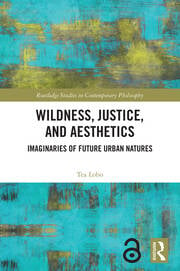
| Judul | Wildness, Justice, and Aesthetics : Imaginaries of Future Urban Natures / Tea Lobo |
| Pengarang | Lobo, Tea |
| Penerbitan | New York : Routledge, 2026 |
| Deskripsi Fisik | 314 |
| ISBN | 9781003363019 |
| Subjek | URBAN NATURES WILDNESS AND JUSTICE ENVIRONMENTAL JUSTICE |
| Abstrak | Urbanization is expanding at rapid rates worldwide. This growth depletes resources, destroys habitats, and negatively affects mental health by distancing people from nature. On the other hand, per-capita resource and space consumption decreases significantly in cities compared to suburban and rural forms of life. By concentrating people into dense settlements, cities render resource usage more efficiently and they free up spaces for other species and natural processes. Yet these apparent ecological benefits risk coming at the cost of human alienation from the rest of the natural world. This tension raises a fundamental philosophical question: Must the city stand in opposition to nature? Or can it be reimagined as a shared habitat in which human and other forms of life co-inhabit and co-produce the world? How can it become a city for all, including other species? The book surveys emerging ways of conceptualizing the relationship between the urban, the natural, and the wild. It explores different models through which cities and nature might coexist, reflects on why the concept of “nature” remains philosophically meaningful despite its contested history. Although the city is nature in a trivial ontological sense—insofar as everything is, in some way, nature—ordinary language often treats the city as an entity or space opposed to nature. The book explores avant-garde approaches in urbanism and architecture that seek to conceive of and then build cities that are in various ways reconciled to nature. It analyzes possible issues of justice and aesthetics, as well as efforts to integrate the wild into the civic sphere of the city. Wildness, Justice, and Aesthetics: Imaginaries of Future Urban Natures will be of interest to scholars and advanced students working in environmental philosophy and environmental humanities, political philosophy, environmental ethics and aesthetics, philosophy of the city, urban ecology, and animal ethics. The Open Access version of this book, available at www.taylorfrancis.com, has been made available under a Creative Commons Attribution-Non Commercial-No Derivatives (CC BY-NC-ND) 4.0 International license. Published with the support of the Swiss National Science Foundation. |
| Bentuk Karya | Tidak ada kode yang sesuai |
| Target Pembaca | Tidak ada kode yang sesuai |
| Lokasi Akses Online |
https://www.taylorfrancis.com/books/oa-mono/10.4324/9781003363019/wildness-justice-aesthetics-tea-lobo?context=ubx&refId=b5d8c564-31f9-41b5-8604-f0d484cd3006 |
| No Barcode | No. Panggil | Akses | Lokasi | Ketersediaan |
|---|---|---|---|---|
| 159626192 | 307.76 LOB w | Baca Online | Perpustakaan Pusat - Online Resources Ebook |
Tersedia |
| Tag | Ind1 | Ind2 | Isi |
| 001 | INLIS000000000170478 | ||
| 005 | 20260912043118 | ||
| 007 | ta | ||
| 008 | 260912################|##########|#|## | ||
| 020 | # | # | $a 9781003363019 |
| 035 | # | # | $a 0010-0926000772 |
| 082 | # | # | $a 307.76 |
| 084 | # | # | $a 307.76 LOB w |
| 100 | 0 | # | $a Lobo, Tea |
| 245 | 1 | # | $a Wildness, Justice, and Aesthetics : $b Imaginaries of Future Urban Natures /$c Tea Lobo |
| 260 | # | # | $a New York :$b Routledge,$c 2026 |
| 300 | # | # | $a 314 |
| 520 | # | # | $a Urbanization is expanding at rapid rates worldwide. This growth depletes resources, destroys habitats, and negatively affects mental health by distancing people from nature. On the other hand, per-capita resource and space consumption decreases significantly in cities compared to suburban and rural forms of life. By concentrating people into dense settlements, cities render resource usage more efficiently and they free up spaces for other species and natural processes. Yet these apparent ecological benefits risk coming at the cost of human alienation from the rest of the natural world. This tension raises a fundamental philosophical question: Must the city stand in opposition to nature? Or can it be reimagined as a shared habitat in which human and other forms of life co-inhabit and co-produce the world? How can it become a city for all, including other species? The book surveys emerging ways of conceptualizing the relationship between the urban, the natural, and the wild. It explores different models through which cities and nature might coexist, reflects on why the concept of “nature” remains philosophically meaningful despite its contested history. Although the city is nature in a trivial ontological sense—insofar as everything is, in some way, nature—ordinary language often treats the city as an entity or space opposed to nature. The book explores avant-garde approaches in urbanism and architecture that seek to conceive of and then build cities that are in various ways reconciled to nature. It analyzes possible issues of justice and aesthetics, as well as efforts to integrate the wild into the civic sphere of the city. Wildness, Justice, and Aesthetics: Imaginaries of Future Urban Natures will be of interest to scholars and advanced students working in environmental philosophy and environmental humanities, political philosophy, environmental ethics and aesthetics, philosophy of the city, urban ecology, and animal ethics. The Open Access version of this book, available at www.taylorfrancis.com, has been made available under a Creative Commons Attribution-Non Commercial-No Derivatives (CC BY-NC-ND) 4.0 International license. Published with the support of the Swiss National Science Foundation. |
| 650 | # | # | $a ENVIRONMENTAL JUSTICE |
| 650 | # | # | $a URBAN NATURES |
| 650 | # | # | $a WILDNESS AND JUSTICE |
| 856 | # | # | $a https://www.taylorfrancis.com/books/oa-mono/10.4324/9781003363019/wildness-justice-aesthetics-tea-lobo?context=ubx&refId=b5d8c564-31f9-41b5-8604-f0d484cd3006 |
| 990 | # | # | $a 159626192 |
Content Unduh katalog
Karya Terkait :