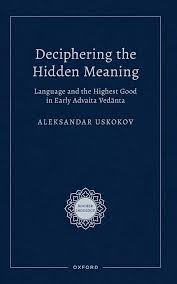
| Judul | Deciphering the Hidden Meaning : Language and the Highest Good in Early Advaita Ved?nta / Uskokov, Aleksandar |
| Pengarang | Uskokov, Aleksandar |
| Penerbitan | New York : Oxford University Press, 2026 |
| Deskripsi Fisik | 424 :ilus |
| ISBN | 9780197861493 |
| Subjek | PHILOSOPHY |
| Abstrak | This study examines the relationship between language and liberation in early Advaita Ved?nta, focusing on ?a?kara (early eighth century ce) as a key figure. Challenging modern portrayals of ?a?kara as a mystic, the work presents him as a “theologian of liberation” who argued that the liberation from embodiment as the highest human good (para? ?reyas) is attained not through ritual or meditation, but through immediate intellectual understanding of Upani?adic identity statements. The analysis attributes the development of this soteriological model to ?a?kara’s intervention against Vedic theologians who viewed scripture as prescriptive rather than informative. ?a?kara’s focus on the identity statements would eventually lead to the appearance of the idea of mah?-v?kyas or “great statements” such as tat tvam asi, “You are That.” While often attributed to ?a?kara, the formal mah?-v?kya doctrine was systematized by Sarvajñ?tman in the tenth century ce using M?m??s? models of language hierarchy. |
| Bentuk Karya | Tidak ada kode yang sesuai |
| Target Pembaca | Tidak ada kode yang sesuai |
| Lokasi Akses Online |
https://library.oapen.org/bitstream/handle/20.500.12657/118404/9780197861516.pdf?sequence=1&isAllowed=y |
| No Barcode | No. Panggil | Akses | Lokasi | Ketersediaan |
|---|---|---|---|---|
| 4647 | 181.482 Usk d | Baca Online | Perpustakaan Pusat - Online Resources Ebook |
Tersedia |
| Tag | Ind1 | Ind2 | Isi |
| 001 | INLIS000000000171281 | ||
| 005 | 20261022023323 | ||
| 007 | ta | ||
| 008 | 261022################|##########|#|## | ||
| 020 | # | # | $a 9780197861493 |
| 035 | # | # | $a 0010-1026000676 |
| 082 | # | # | $a 181.482 |
| 084 | # | # | $a 181.482 Usk d |
| 100 | 1 | # | $a Uskokov, Aleksandar |
| 245 | 1 | # | $a Deciphering the Hidden Meaning : $b Language and the Highest Good in Early Advaita Ved?nta /$c Uskokov, Aleksandar |
| 260 | # | # | $a New York :$b Oxford University Press,$c 2026 |
| 300 | # | # | $a 424 : $b ilus |
| 520 | # | # | $a This study examines the relationship between language and liberation in early Advaita Ved?nta, focusing on ?a?kara (early eighth century ce) as a key figure. Challenging modern portrayals of ?a?kara as a mystic, the work presents him as a “theologian of liberation” who argued that the liberation from embodiment as the highest human good (para? ?reyas) is attained not through ritual or meditation, but through immediate intellectual understanding of Upani?adic identity statements. The analysis attributes the development of this soteriological model to ?a?kara’s intervention against Vedic theologians who viewed scripture as prescriptive rather than informative. ?a?kara’s focus on the identity statements would eventually lead to the appearance of the idea of mah?-v?kyas or “great statements” such as tat tvam asi, “You are That.” While often attributed to ?a?kara, the formal mah?-v?kya doctrine was systematized by Sarvajñ?tman in the tenth century ce using M?m??s? models of language hierarchy. |
| 650 | # | # | $a PHILOSOPHY |
| 856 | # | # | $a https://library.oapen.org/bitstream/handle/20.500.12657/118404/9780197861516.pdf?sequence=1&isAllowed=y |
| 990 | # | # | $a 4647 |
Content Unduh katalog
Karya Terkait :