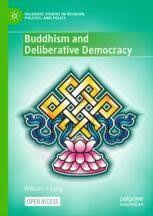
| Judul | Buddhism and Deliberative Democracy / William J. Long |
| Pengarang | Long, William J. |
| Penerbitan | Cham : Palgrave Macmillan, 2026 |
| Deskripsi Fisik | XIII, 116 p. |
| ISBN | 978-3-032-20691-6 |
| Subjek | DELIBERATIVE DEMOCRACY BUDDHISM — POLITICAL ASPECTS |
| Catatan | In this open-access book, William J. Long argues that the Buddhist sa?gha—whose governance the Buddha modeled in part on the republican assemblies of his era—was not only a religious community, but a sophisticated experiment in deliberative democracy. Designed as a self-governing polity, the sa?gha served as an exemplar for society in the Buddha’s time and offers a strikingly relevant model for our own. At a moment when democracies around the world face declining effectiveness, political theorists increasingly turn to deliberative democracy as a remedy. This approach holds that democratic decisions become more legitimate, more informed, and more stable through the public exchange of reasons among free and equal citizens. Ideally, deliberation aims at reasoned consensus oriented toward the common good, rather than outcomes driven solely by power or competing self-interests. Yet nearly all contemporary accounts of deliberative democracy are Western in origin and largely confined to late twentieth- and twent |
| Bentuk Karya | Tidak ada kode yang sesuai |
| Target Pembaca | Tidak ada kode yang sesuai |
| Lokasi Akses Online |
https://link.springer.com/book/10.1007/978-3-032-20691-6 https://doi.org/10.1007/978-3-032-20691-6 |
| No Barcode | No. Panggil | Akses | Lokasi | Ketersediaan |
|---|---|---|---|---|
| 421726192 | 321.8 Lon b | Baca Online | Perpustakaan Pusat - Online Resources Ebook |
Tersedia |
| Tag | Ind1 | Ind2 | Isi |
| 001 | INLIS000000000171304 | ||
| 005 | 20261022053745 | ||
| 007 | ta | ||
| 008 | 261022################|##########|#|## | ||
| 020 | # | # | $a 978-3-032-20691-6 |
| 035 | # | # | $a 0010-1026000699 |
| 082 | # | # | $a 321.8 |
| 084 | # | # | $a 321.8 Lon b |
| 100 | 1 | # | $a Long, William J. |
| 245 | 1 | # | $a Buddhism and Deliberative Democracy /$c William J. Long |
| 260 | # | # | $a Cham :$b Palgrave Macmillan,$c 2026 |
| 300 | # | # | $a XIII, 116 p. |
| 505 | # | # | $a In this open-access book, William J. Long argues that the Buddhist sa?gha—whose governance the Buddha modeled in part on the republican assemblies of his era—was not only a religious community, but a sophisticated experiment in deliberative democracy. Designed as a self-governing polity, the sa?gha served as an exemplar for society in the Buddha’s time and offers a strikingly relevant model for our own. At a moment when democracies around the world face declining effectiveness, political theorists increasingly turn to deliberative democracy as a remedy. This approach holds that democratic decisions become more legitimate, more informed, and more stable through the public exchange of reasons among free and equal citizens. Ideally, deliberation aims at reasoned consensus oriented toward the common good, rather than outcomes driven solely by power or competing self-interests. Yet nearly all contemporary accounts of deliberative democracy are Western in origin and largely confined to late twentieth- and twenty-first-century thought. Buddhism and Deliberative Democracy challenges this assumption. Drawing on canonical texts and historical practices, Long demonstrates that the early sa?gha institutionalized regular assemblies, open deliberation, and collective problem-solving among members who participated as equals across lines of class, caste, and—within historical limits—gender. Guided by the Vinaya, a detailed constitutional framework, sa?gha governance combined procedural rigor with a commitment to moral development, harmony, and the common good. Long interprets the Buddha’s teachings as a distinct and underappreciated contribution to political philosophy, presenting him as a rational, pragmatic, and deeply democratic thinker. In doing so, the book expands the intellectual foundations of deliberative democracy and invites a rethinking of its global and historical origin. |
| 650 | # | # | $a BUDDHISM — POLITICAL ASPECTS |
| 650 | # | # | $a DELIBERATIVE DEMOCRACY |
| 856 | # | # | $a https://doi.org/10.1007/978-3-032-20691-6 |
| 856 | # | # | $a https://link.springer.com/book/10.1007/978-3-032-20691-6 |
| 990 | # | # | $a 421726192 |
Content Unduh katalog