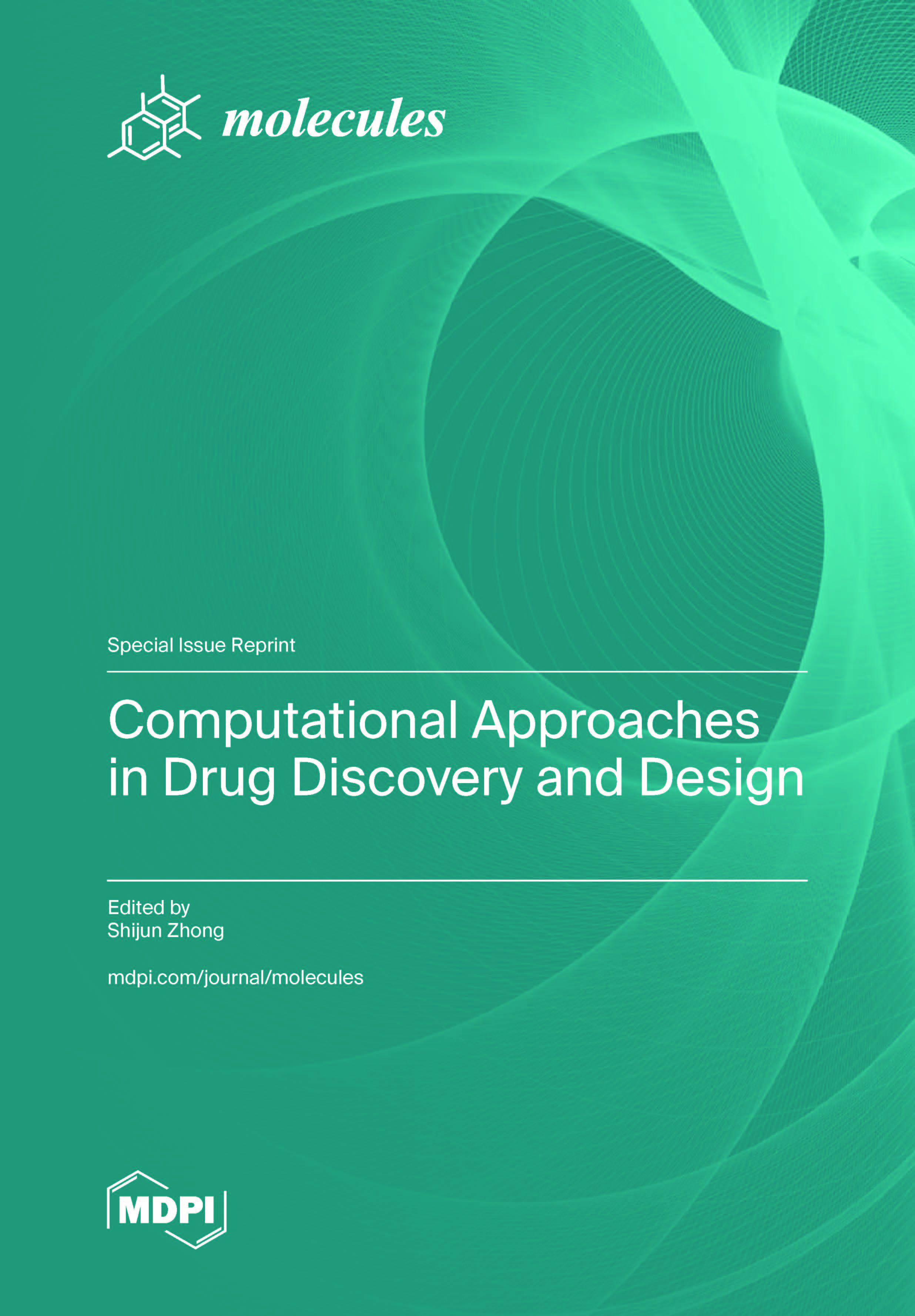
| Judul | Computational Approaches in Drug Discovery and Design / Shijun Zhong (editor) |
| Pengarang | Zhong, Shijun (editor) |
| Penerbitan | Basel, Switzerland : MDPI AG, 2026 |
| Deskripsi Fisik | 146 p. :ill. |
| ISBN | 978-3-7258-6703-5 |
| Subjek | DRUG DESIGN MODELS MOLECULAR |
| Abstrak | In this Special Issue, we have collected some research works on drug design using computational methods with respect to drug–target interactions, covering three topics, i.e., the developments of methods including machine learning and transformer-based models, the conformational effects in the target site based on molecular dynamics simulations, and the rational design of new inhibitors via virtual screening and experimental validation. Xiaojuan Shen et al. proposed a molecular generative model, NIMO, based on a conditional transformer neural network model. Xiangying Zhang et al. developed METEOR, a graph-based generative model within a reinforcement learning framework. As discussed in the review by Xin Qi et al., many computational tools utilizing arti?cial intelligence (AI) algorithms have been developed in recent years, such as DeepHome2.0, AFTGAN, and PeSTo for protein–protein interactions; DeepDTAF, DeepAffinity, DeepMGT-DT, MolTranse, DTITR, GSATDTA, and VITScore for drug–target interactions; MolGPT, LigGPT, AlphaDrug, and cMolGPT for de novo drug design; and SMILES-BERT, ChemBERTa, K-BERT, DHTNN, MolFPG, and GROVER for predicting molecular properties. Several integrated approaches have been built from some of the typical computational tools, including CHARMM, ROSETTA3, VMD, GROMACS, Marvin Sketch, Chimera, Avogadro, SPORES, DataWarrior, Schrödinger, MOE, PLANTS, Pharmit, Swiss-ADME, Swiss Target Prediction, and MouseTox. These approaches were applied to systems such as cytochrome P450, SARS-CoV-2, Gram-positive bacteria, PPAR? partial agonists, and a set of protein–ligand complexes collected in PDBbind. |
| Bentuk Karya | Tidak ada kode yang sesuai |
| Target Pembaca | Tidak ada kode yang sesuai |
| Lokasi Akses Online |
https://www.mdpi.com/books/reprint/12291-computational-approaches-in-drug-discovery-and-design |
| No Barcode | No. Panggil | Akses | Lokasi | Ketersediaan |
|---|---|---|---|---|
| 133426192 | 615.102 85 Zho c | Baca Online | Perpustakaan Pusat - RBU KKB Ebook |
Tersedia |
| Tag | Ind1 | Ind2 | Isi |
| 001 | INLIS000000000167255 | ||
| 005 | 20260226093041 | ||
| 007 | ta | ||
| 008 | 260226################|##########|#|## | ||
| 020 | # | # | $a 978-3-7258-6703-5 |
| 035 | # | # | $a 0010-0226001195 |
| 082 | # | # | $a 615.102 85 |
| 084 | # | # | $a 615.102 85 Zho c |
| 100 | 0 | # | $a Zhong, Shijun (editor) |
| 245 | 1 | # | $a Computational Approaches in Drug Discovery and Design /$c Shijun Zhong (editor) |
| 260 | # | # | $a Basel, Switzerland :$b MDPI AG,$c 2026 |
| 300 | # | # | $a 146 p. : $b ill. |
| 520 | # | # | $a In this Special Issue, we have collected some research works on drug design using computational methods with respect to drug–target interactions, covering three topics, i.e., the developments of methods including machine learning and transformer-based models, the conformational effects in the target site based on molecular dynamics simulations, and the rational design of new inhibitors via virtual screening and experimental validation. Xiaojuan Shen et al. proposed a molecular generative model, NIMO, based on a conditional transformer neural network model. Xiangying Zhang et al. developed METEOR, a graph-based generative model within a reinforcement learning framework. As discussed in the review by Xin Qi et al., many computational tools utilizing arti?cial intelligence (AI) algorithms have been developed in recent years, such as DeepHome2.0, AFTGAN, and PeSTo for protein–protein interactions; DeepDTAF, DeepAffinity, DeepMGT-DT, MolTranse, DTITR, GSATDTA, and VITScore for drug–target interactions; MolGPT, LigGPT, AlphaDrug, and cMolGPT for de novo drug design; and SMILES-BERT, ChemBERTa, K-BERT, DHTNN, MolFPG, and GROVER for predicting molecular properties. Several integrated approaches have been built from some of the typical computational tools, including CHARMM, ROSETTA3, VMD, GROMACS, Marvin Sketch, Chimera, Avogadro, SPORES, DataWarrior, Schrödinger, MOE, PLANTS, Pharmit, Swiss-ADME, Swiss Target Prediction, and MouseTox. These approaches were applied to systems such as cytochrome P450, SARS-CoV-2, Gram-positive bacteria, PPAR? partial agonists, and a set of protein–ligand complexes collected in PDBbind. |
| 650 | # | # | $a DRUG DESIGN |
| 650 | # | # | $a MODELS |
| 650 | # | # | $a MOLECULAR |
| 856 | # | # | $a https://www.mdpi.com/books/reprint/12291-computational-approaches-in-drug-discovery-and-design |
| 990 | # | # | $a 133426192 |
Content Unduh katalog
Karya Terkait :