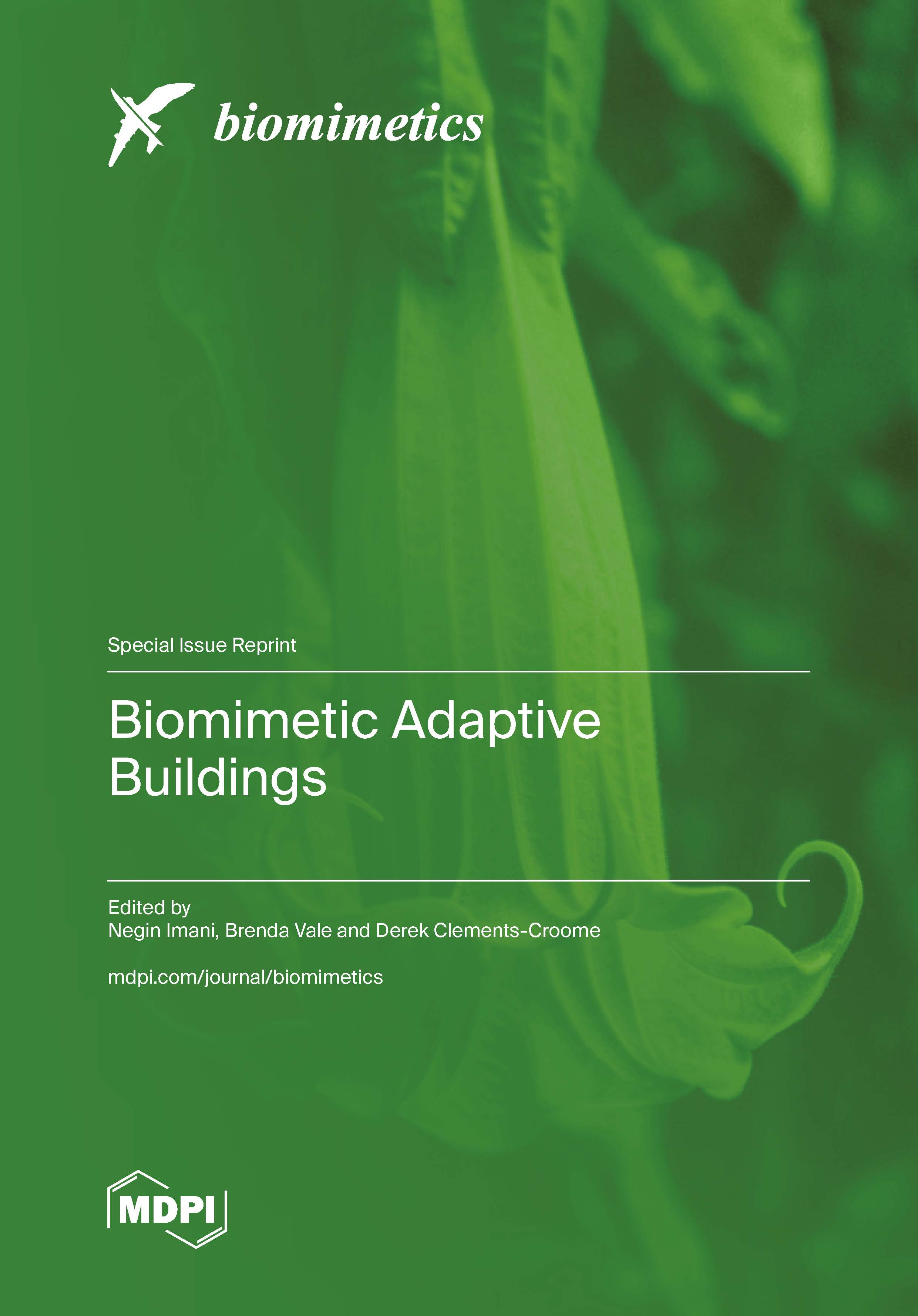
| Judul | Biomimetic Adaptive Buildings / Negin Imani |
| Pengarang | Negin Imani Brenda Vale Derek Clements-Croome |
| Penerbitan | 4052 Basel, Switzerland : MDPI, 2026 |
| Deskripsi Fisik | 204 :ill |
| ISBN | 978-3-7258-6907-7 |
| Subjek | Engineering, biology, physics |
| Catatan | "Summary One path via which to combat climate change is to consider buildings as living beings rather than dead objects. This might mean creating a building façade that alters in response to changing climatic conditions. In a building with such a facade, adaptation happens via the automatic regulation of temperature, light, or airflow. This can lead to both a reduction in the operational energy used and to the enhanced comfort of the internal environment. Examples of current advancements in the design of such facades include integrated self-adjusting shading devices, dynamic insulation, and responsive ventilation in order to provide autonomous and real-time control. Other examples of living building elements are nature-inspired materials, such as brick-integrated bacteria, and photobioreactors, like algae. The self-regulating mechanisms present in living building technologies are either active or passive. Active methods of adaptation employ extrinsic mechanisms such as sensors, processors and actuators to op |
| Bentuk Karya | Tidak ada kode yang sesuai |
| Target Pembaca | Tidak ada kode yang sesuai |
| Lokasi Akses Online |
https://www.mdpi.com/books/reprint/12467-biomimetic-adaptive-buildings |
| No Barcode | No. Panggil | Akses | Lokasi | Ketersediaan |
|---|---|---|---|---|
| 112726192 | 720.472 Neg b | Baca Online | Perpustakaan Pusat - RBU KKB Ebook |
Tersedia |
| Tag | Ind1 | Ind2 | Isi |
| 001 | INLIS000000000167821 | ||
| 005 | 20260330032925 | ||
| 007 | ta | ||
| 008 | 260330################|##########|#|## | ||
| 020 | # | # | $a 978-3-7258-6907-7 |
| 035 | # | # | $a 0010-0326000550 |
| 082 | # | # | $a 720.472 |
| 084 | # | # | $a 720.472 Neg b |
| 100 | 0 | # | $a Negin Imani |
| 245 | 1 | # | $a Biomimetic Adaptive Buildings /$c Negin Imani |
| 260 | # | # | $a 4052 Basel, Switzerland :$b MDPI,$c 2026 |
| 300 | # | # | $a 204 : $b ill |
| 505 | # | # | $a "Summary One path via which to combat climate change is to consider buildings as living beings rather than dead objects. This might mean creating a building façade that alters in response to changing climatic conditions. In a building with such a facade, adaptation happens via the automatic regulation of temperature, light, or airflow. This can lead to both a reduction in the operational energy used and to the enhanced comfort of the internal environment. Examples of current advancements in the design of such facades include integrated self-adjusting shading devices, dynamic insulation, and responsive ventilation in order to provide autonomous and real-time control. Other examples of living building elements are nature-inspired materials, such as brick-integrated bacteria, and photobioreactors, like algae. The self-regulating mechanisms present in living building technologies are either active or passive. Active methods of adaptation employ extrinsic mechanisms such as sensors, processors and actuators to operate. On the other hand, passive methods of adaptation are achieved via intrinsic means of control, such as the constant change of material properties. This Reprint brings together papers that reflect investigations into living building and living building elements and reports on a vast range of ways in which adaptation is achieved within buildings, either through the morphological configuration of façade components, the implementation of smart materials, or using nature-inspired materials and principles in the building façade." |
| 650 | # | # | $a Engineering, biology, physics |
| 700 | 0 | # | $a Brenda Vale |
| 700 | 0 | # | $a Derek Clements-Croome |
| 856 | # | # | $a https://www.mdpi.com/books/reprint/12467-biomimetic-adaptive-buildings |
| 990 | # | # | $a 112726192 |
Content Unduh katalog